The Agentic Era Will Expose Leadership Bottlenecks
In the agentic era, traditional leadership models will be tested as AI-driven autonomy challenges centralized control.
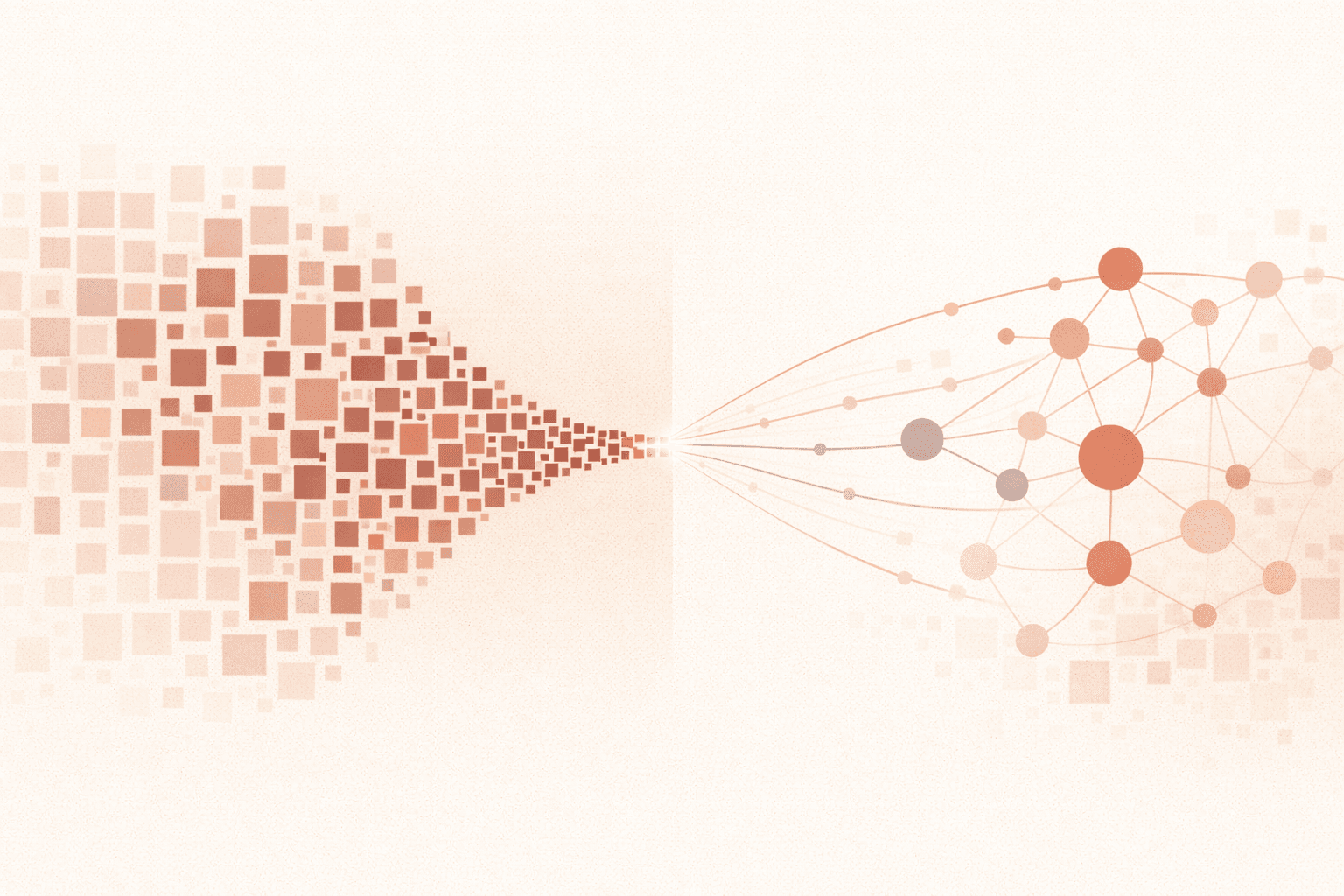
The Agentic Era Will Expose Leadership Bottlenecks
The next wave of AI transformation will not fail because of model quality. It will fail because of leadership design.
Most organizations are still trying to run agentic systems with SaaS-era management instincts:
- centralize approvals,
- increase reporting layers,
- and treat autonomy as a risk to be minimized.
That instinct feels responsible. In practice, it produces a brittle system: slower decisions, weak ownership, and hidden operational risk.
Across enterprise programs, the same pattern keeps appearing. Teams introduce capable agents, orchestration workflows, and evaluation tooling, then route every meaningful decision back into a narrow human bottleneck. The architecture is modern, but the operating model is still legacy.
The result is not intelligent autonomy. It is expensive paralysis.
The Real Transition: From Tool Adoption to Execution Architecture
The first phase of enterprise AI adoption was tool-centric:
- copilots,
- chat interfaces,
- summarization features,
- and isolated automation scripts.
Those tools improved individual productivity but did not fundamentally redesign execution.
The agentic phase is different. Agentic systems operate across boundaries. They retrieve context, decide within constraints, trigger actions, coordinate with other systems, and feed outcomes back into improvement loops.
That means the core leadership question changes from:
"How do we roll out AI features?"
to:
"How do we design a system where decisions can execute safely without waiting for hierarchy?"
If leadership does not answer that question directly, agentic adoption stalls in pilot mode.
Why Centralized Control Becomes a Risk Multiplier
Leaders often centralize control during uncertainty because it lowers perceived variance. Unfortunately, it increases systemic risk in four ways.
- Decision latency grows faster than workload.
- Exception handling becomes the default operating mode.
- Teams optimize for approval compliance instead of outcome quality.
- Learning loops break because feedback arrives too late.
In other words, a control-heavy system appears safer at the policy layer while becoming less safe at the execution layer.
This is why many AI programs report high activity and low impact. The system is busy, but not adaptive.
The Three Leadership Failure Modes We See Most Often
1) Escalation Culture Masquerading as Governance
When everything must "go upstairs," governance turns into queue management. The organization confuses oversight with quality.
Symptoms:
- frequent manual approvals for routine actions,
- high-priority queues that never shrink,
- and senior leaders acting as throughput gates.
2) Policy by PDF Instead of Policy by Runtime Constraint
Many teams document governance but do not operationalize it. They publish principles but fail to encode guardrails into execution.
Symptoms:
- broad policy statements with no machine-enforceable rules,
- inconsistent behavior across teams,
- and audit outcomes that rely on memory instead of evidence.
3) KPI Stability Over Learning Velocity
Dashboards often over-index on reporting stability and under-index on learning speed. But in the agentic era, adaptation speed is the competitive variable.
Symptoms:
- low tolerance for controlled experimentation,
- delayed feedback on failures,
- and performance reviews that reward predictability over system improvement.
A Leadership Model That Actually Scales Agentic Execution
Agentic-ready leadership is not "less control." It is better control architecture.
The most resilient teams separate five layers clearly.
1) Intent Layer
Define outcomes, constraints, and ownership boundaries. Do not prescribe every micro-step.
2) Policy Layer
Encode what is allowed, disallowed, and conditionally allowed. Make policy executable, testable, and versioned.
3) Execution Layer
Let agents and workflows act inside those boundaries with explicit handoffs. Design for rapid local decisions, not centralized routing.
4) Evidence Layer
Capture turn, tool, and decision evidence so outcomes are inspectable. Traceability is not optional once autonomy increases.
5) Improvement Layer
Run recurring evaluation loops. Use failures to tighten policy and improve runtime behavior.
This layered model creates a useful paradox: more autonomy with stronger safety.
A Practical 90-Day Transition Plan
Most teams do not need a full organizational reorg to begin. They need a structured transition path.
Days 1-30: Establish Boundaries and Baseline
- pick one workflow with measurable business impact,
- map current decision bottlenecks,
- define explicit "auto-allow," "auto-block," and "escalate" rules,
- and baseline cycle time, exception rate, and rework.
Days 31-60: Encode Guardrails and Instrument Execution
- convert governance statements into runtime constraints,
- enforce action preconditions in workflow logic,
- add evidence capture for key decisions,
- and run weekly failure reviews focused on system fixes, not blame.
Days 61-90: Expand Scope with Controlled Autonomy
- increase autonomy only where evidence quality is high,
- reduce approvals for low-risk, high-frequency decisions,
- measure recovery speed when policy violations occur,
- and publish a monthly "what we learned" review across leadership.
This sequence turns governance from a meeting process into an engineering process.
The Board-Level Metrics That Matter
If leadership wants a useful control panel for agentic transformation, track metrics that reflect execution quality, not presentation quality.
- Autonomy rate by workflow stage.
- Escalation rate and mean escalation delay.
- Policy violation rate and mean time to recovery.
- Rework percentage after agent-assisted execution.
- Learning half-life: time from incident discovery to policy/runtime fix in production.
If these metrics do not improve, the organization is adding AI spend without compounding capability.
Common Objections and Why They Fail
"We need human approval for everything important."
High-risk actions may need approvals. Routine actions should not. If everything is "important," nothing is operationally scalable.
"Our regulators will never allow this."
Regulators usually require traceability, controls, and accountability. Policy-embedded systems with evidence trails can outperform ad hoc human processes on all three.
"Autonomy means loss of control."
Unstructured autonomy is risky. Structured autonomy with executable guardrails is stronger control than social enforcement and tribal knowledge.
The Strategic Choice
Over the next two years, we will likely see two classes of enterprises.
- Organizations that add AI tools to existing hierarchy.
- Organizations that redesign execution around bounded autonomy.
The second group will outperform not because they bought better models, but because they built a better leadership system around those models.
If you are leading an AI initiative, ask four questions now.
- Where exactly does execution wait for hierarchy today?
- Which governance rules are still human-only and non-executable?
- How fast do we convert incidents into system improvements?
- What decisions can we safely decentralize this quarter?
If these answers are vague, your bottleneck is not technology. It is leadership architecture.
The agentic era is less about artificial intelligence and more about organizational intelligence.
The organizations that win will not be those with the flashiest demos. They will be those that can orchestrate humans, agents, policy, and evidence into one coherent operating model.
Where Gaia Fits
Gaia is useful when teams want to turn this leadership model into actual operating infrastructure instead of leaving it at the slideware level. The platform is most relevant once leadership has already decided to define bounded autonomy, explicit controls, and evidence-backed execution.
If you want to go deeper, the best next resources are the for the operating model, the for the capability-building side, and the for the concrete workflows teams can actually run. The related post on is also a useful companion because it frames why governance delays are often a leadership design problem before they become a tooling problem.
About the author
Kostas Karolemeas
Product and Technology Lead of Gaia, two-time founder, and software product executive with more than three decades of experience building and scaling products across healthcare, architectural and mechanical engineering software, logistics and supply chain, financial services and banking, enterprise resource planning (ERP), and visual effects (VFX) for television.